

Introduction
However, sending an email does not guarantee that it will reach a guest’s inbox.
Email providers such as Gmail and Yahoo now apply stricter standards to reduce spam and protect users from unwanted or misleading messages. Hotels that do not follow good email practices may see more campaigns filtered into spam, delayed, or blocked.
For hotel marketers, email deliverability is not only a technical issue. It can directly affect campaign performance, guest communication, and booking revenue.
Why Hotel Email Deliverability Matters
A hotel may spend time creating an attractive campaign, writing a strong offer, and selecting the right audience. None of that matters if the message never reaches the guest.
Email providers look at several factors when deciding whether a message should appear in the inbox. These may include:
- Whether the sender appears legitimate
- How often recipients report the emails as spam
- Whether people can unsubscribe easily
- How recipients engage with previous messages
- Whether the hotel is sending to active and valid email addresses
A poor sender reputation can make future campaigns harder to deliver, even when the content is relevant.
Hotels Often Send Emails Through Several Systems
Hotel email programs can become complicated because messages may come from different platforms.
A property may use one system for reservations, another for guest marketing, and another for loyalty or pre-arrival communication. A hotel may also work with an outside agency or technology provider.
When several platforms send messages under the same hotel brand, it is important to make sure they are all properly connected and managed.
Hotels should keep a clear record of every system and vendor that sends email on their behalf. This can help prevent issues when changing providers, launching a new platform, or updating the hotel’s marketing technology.
Make It Easy for Guests to Unsubscribe
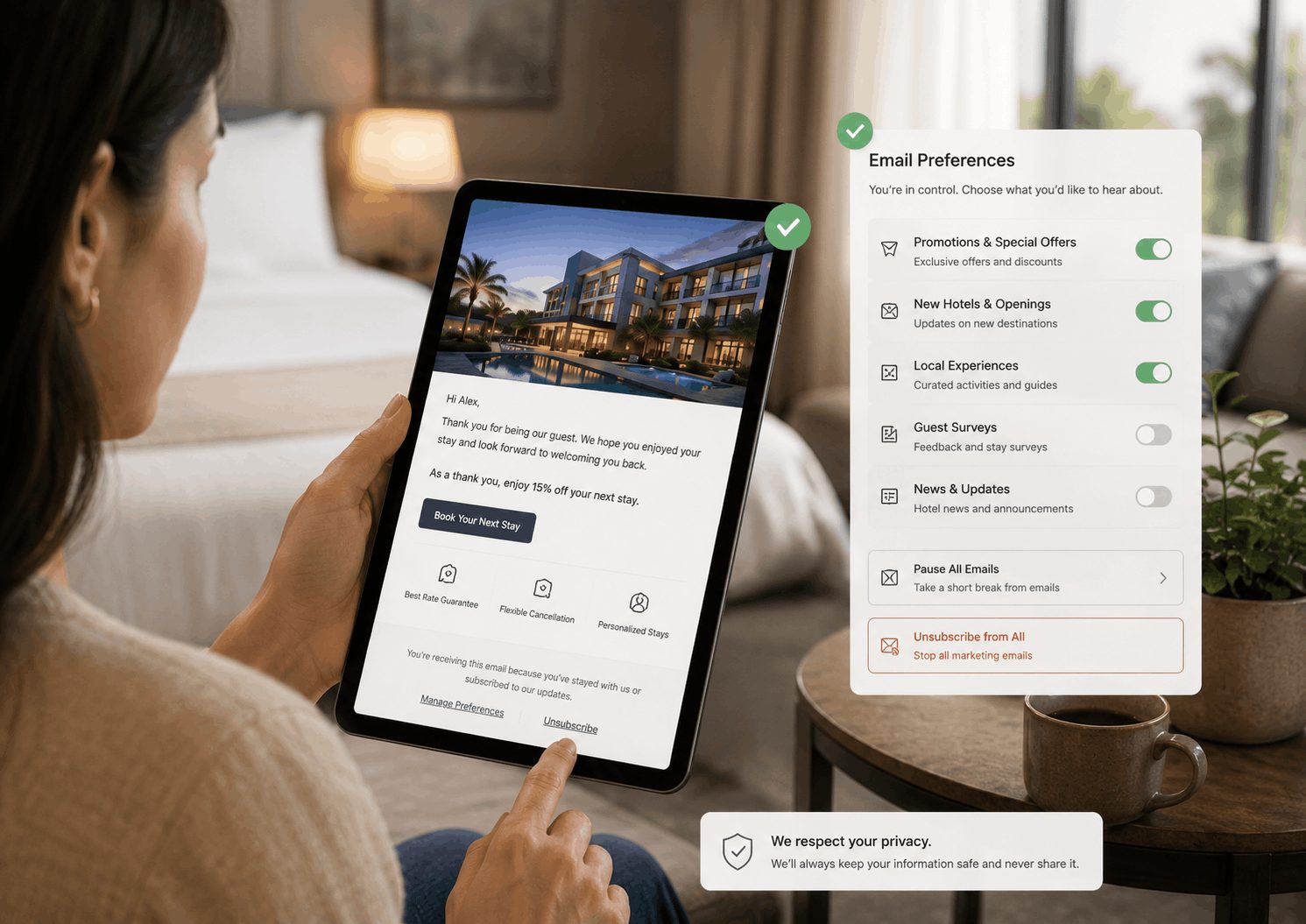
Guests should be able to stop receiving promotional emails without searching through the message or completing a complicated process.
A clear unsubscribe option is not only a good customer experience. It can also protect the hotel’s email performance.
When recipients cannot easily unsubscribe, they may mark the message as spam instead. Too many spam complaints can damage the hotel’s sender reputation and reduce the chances of future messages reaching the inbox.
Hotels should also make sure unsubscribe requests are processed quickly across all marketing systems. A guest who opts out through one platform should not continue receiving the same type of promotion from another.
Focus on Database Quality
A large email list is not always a strong email list.
Hotel databases often contain outdated addresses, duplicate records, previous guests who no longer engage, and contacts who may not remember signing up.
Continuing to email these contacts can lead to:
- More bounced messages
- Lower engagement
- More unsubscribes
- More spam complaints
- Less reliable campaign reporting
Hotels should regularly review their databases and remove invalid, duplicated, or consistently inactive contacts.
A smaller list of people who recognize the hotel and are interested in its offers is often more valuable than a large database filled with unresponsive addresses.
Send Relevant Messages to the Right Guests
Sending the same campaign to every contact may be easier, but it is not always effective.
Guests have different interests, booking histories, travel patterns, and reasons for staying. A business traveler may not respond to the same offer as a family planning a vacation. A past spa guest may be more interested in a wellness package than a general room promotion.
Hotels can improve email performance by organizing contacts into useful audience groups based on information such as:
- Previous stays
- Property interests
- Location
- Loyalty status
- Past bookings or purchases
- Engagement with previous campaigns
More relevant emails are more likely to be opened, clicked, and remembered. They are also less likely to feel unwanted.
Avoid Sending Too Often
More emails do not automatically lead to more bookings.
Sending too frequently can cause recipients to lose interest, unsubscribe, or report the messages as spam. This is especially true when every campaign contains a similar offer or does not match the guest’s interests.
Hotels should review how often they contact guests and pay attention to changes in engagement.
A sudden increase in unsubscribes or spam complaints may be a sign that the hotel is sending too often, reaching the wrong audience, or repeating the same message.
The goal should be to remain helpful and relevant without overwhelming the guest.

Separate Important Guest Messages From Promotions
Not every hotel email serves the same purpose.
Some messages contain essential information related to an existing reservation, including:
- Booking confirmations
- Check-in instructions
- Payment receipts
- Cancellation notices
- Changes affecting a stay
Other messages are promotional and are intended to encourage another booking or purchase.
Important guest information should be clear and easy to find. Hotels should avoid filling reservation-related emails with so much advertising that the main purpose of the message becomes unclear.
Keeping essential communication separate from general promotions can also help protect important messages if a marketing campaign experiences delivery problems.
Monitor More Than Open Rates
Open rates can be useful, but they do not tell the full story.
Hotels should also monitor:
- Delivery rates
- Bounced emails
- Unsubscribes
- Spam complaints
- Clicks
- Website visits
- Direct bookings
- Revenue generated by each campaign
These results can reveal whether the hotel is reaching the right people and whether the content is producing meaningful action.
For example, a campaign may have a high open rate but very few bookings. Another may have a smaller audience but generate more revenue because it was sent to a more relevant group of guests.
Work Closely With Email Providers and Marketing Partners
Hotels do not need to manage every part of email delivery alone.
Their email platform, CRM provider, booking engine, agency, or technology partner should be able to explain how guest emails are sent and what steps are being taken to maintain good delivery.
Hotel marketers should ask questions such as:
- Which systems are sending email under our hotel’s name?
- Are unsubscribe requests shared across all platforms?
- How often is the database reviewed?
- Are bounced and inactive contacts removed?
- How are spam complaints monitored?
- What happens when we change email providers?
These conversations can help prevent problems before they affect a major campaign or an important guest message.
Better Email Practices Support More Direct Bookings
Email remains one of the most valuable ways for hotels to communicate directly with guests. Unlike third-party booking platforms or social media channels, it allows hotels to build relationships with an audience they already know.
Protecting that connection requires more than sending frequent promotions.
Hotels need to maintain a clean database, respect guest preferences, make unsubscribing easy, send relevant content, and regularly review campaign performance.
When these practices are managed consistently, hotels have a better chance of reaching the inbox, maintaining guest trust, and using email to support more direct bookings.